












Museo de las Culturas del Norte

The thousand-year-old cultures of the desert: unexpected production links between the arid land and the sea. An inspired building that won a top international prize for architecture.
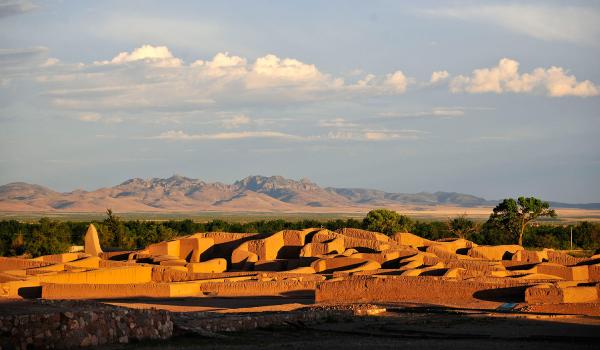
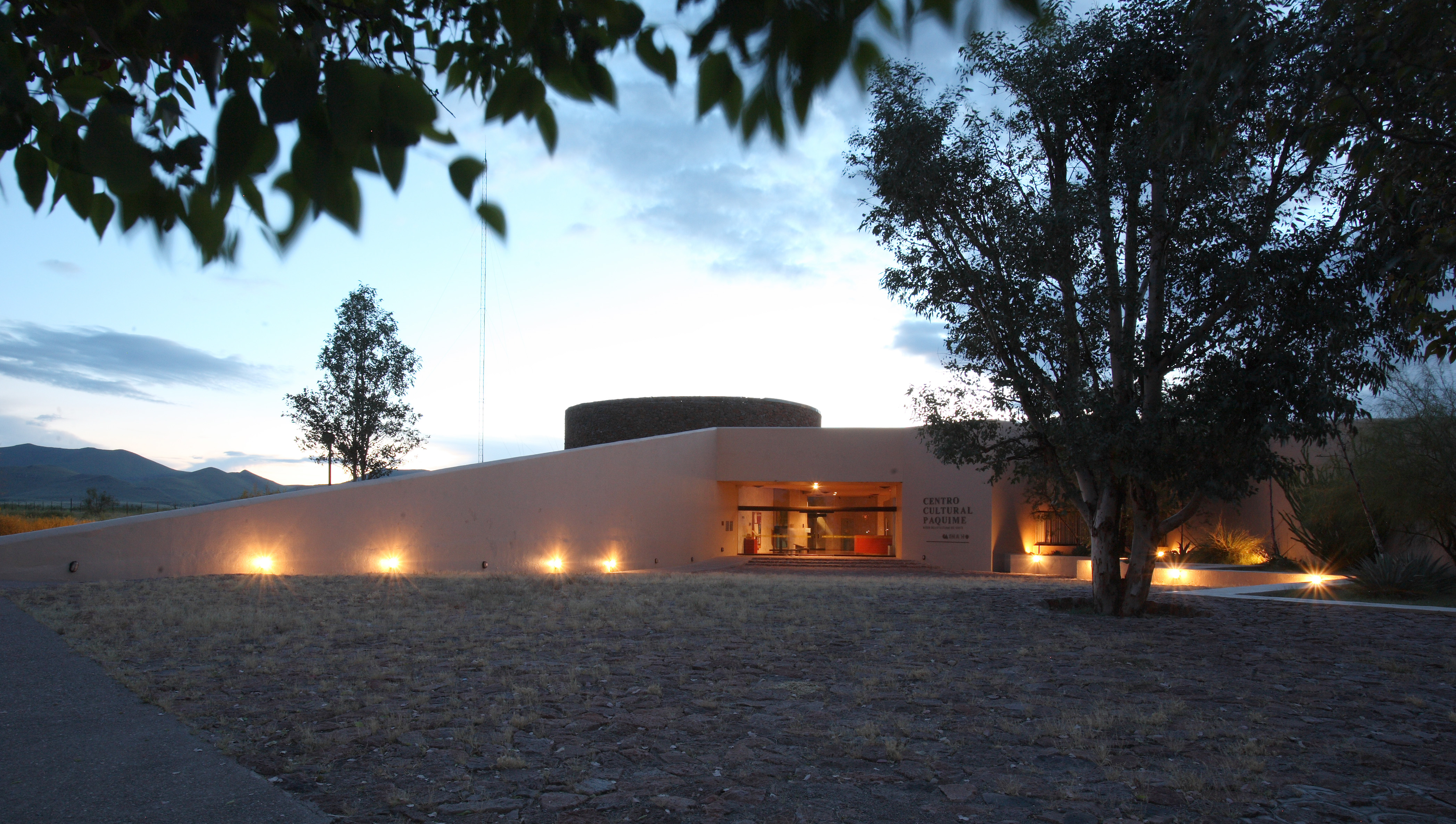
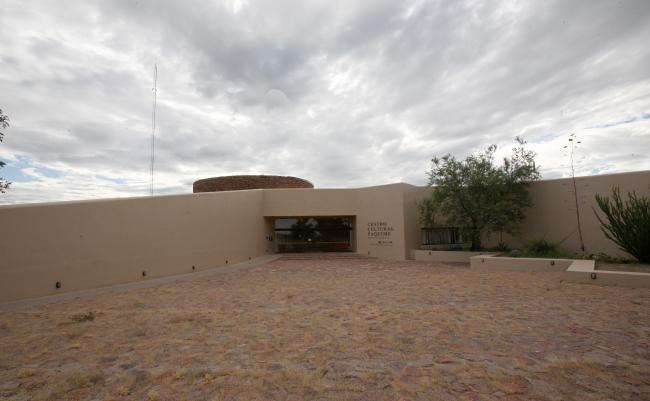
The Museo de Las Culturas del Norte (Museum of Northern Cultures) is located in the Area of Archeological Monuments in Paquimé, in Casas Grandes, Chihuahua, Mexico. Conceived by the architect Mario Schjetnan and the Grupo de Diseño Urbano (“Urban Design Team”), the 23,680-square-foot building was built in 1995. The designers were inspired by the architectural disposition of the pre-Hispanic buildings in Paquimé to incorporate the landscape into this project. The resulting building won the Latin American Grand Prize at the Architecture Biennial of Buenos Aires, Argentina that same year.
According to the designer, the museum was organized around a large, open-air, circular courtyard, and is partially sunken into the ground to camouflage it with the archeological and desert environment. It has a central garden and three adjacent gardens which allow natural light to enter. It also has three exhibition galleries, each of them connected to a differently shaped courtyard. To emphasize the links between the spaces and the flow between the galleries, a gallery has been shaped around the central courtyard, defined by two large, suspended beams. Their curves create a strong contrast with the museum’s reticulated ceiling. The museum’s layout does not have formal sections in order to increase the number of viewpoints. This also brings the exhibition areas and the outdoor courtyards together visually, merging the exhibition with the structure of the space. In addition, the aesthetic qualities of the pieces are highlighted through simple shapes and colors, creating an appropriate balance between them and the educational information. The museum houses and exhibits the Charles Di Peso collection, the site’s leading research archeologist, who received funding from the Amerind Foundation in 1956, in collaboration with the National Institute of Anthropology and History (INAH). His archeological research brought to light data on the history of the people in the area.
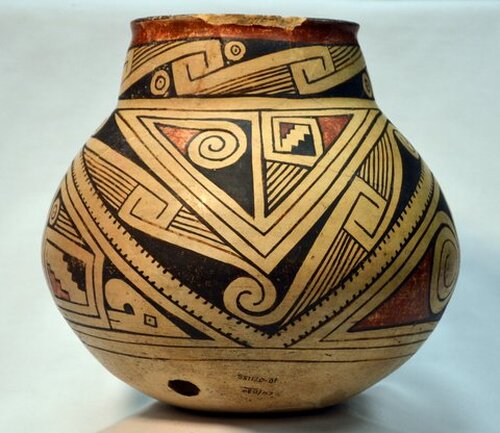
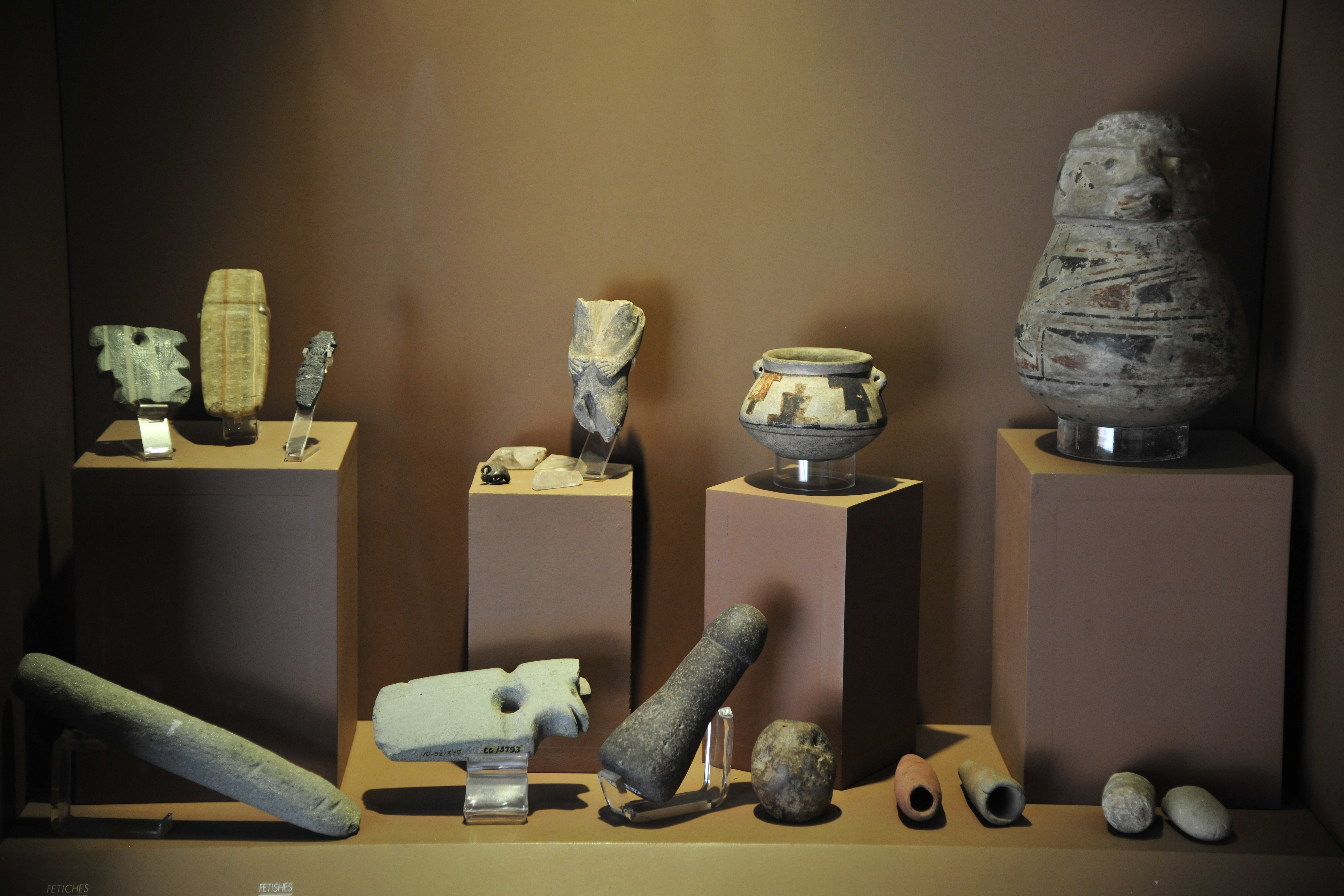
The museum exhibits an extraordinary collection of archeological pieces from the area. The beautiful ceramics are the highlight, but there are also ornaments and ritual objects made from shells, bone, turquoise and copper, and utensils and tools made from stone. Paquimé’s function as a trade center is emphasized through a display of raw materials which were found in large volumes during the excavation work.
The exhibition follows a chronological sequence, from the first settlers in the region until the time of the city’s peak, showing the characteristics of its earthen architecture, people, economic activities, daily life and religion, and ending in its ruin and abandonment.
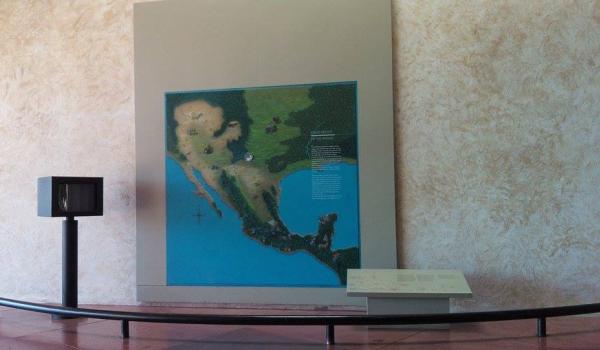
Introductory Hall
The visit begins in the lobby, where a large map, texts, and a video introduce the ecological richness, diversity, and distinctions between two important regions: the Gran Chichimeca and Mesoamerica.



Room 1
To the right, the exhibit "Ancient Times (30,000 B.C. to 100 A.D.)" explores the earliest inhabitants of the region and their practices of hunting and gathering. It features fossils of large mammals and a collection of artifacts that illustrate life during those early times. A map highlights the…
Room 1
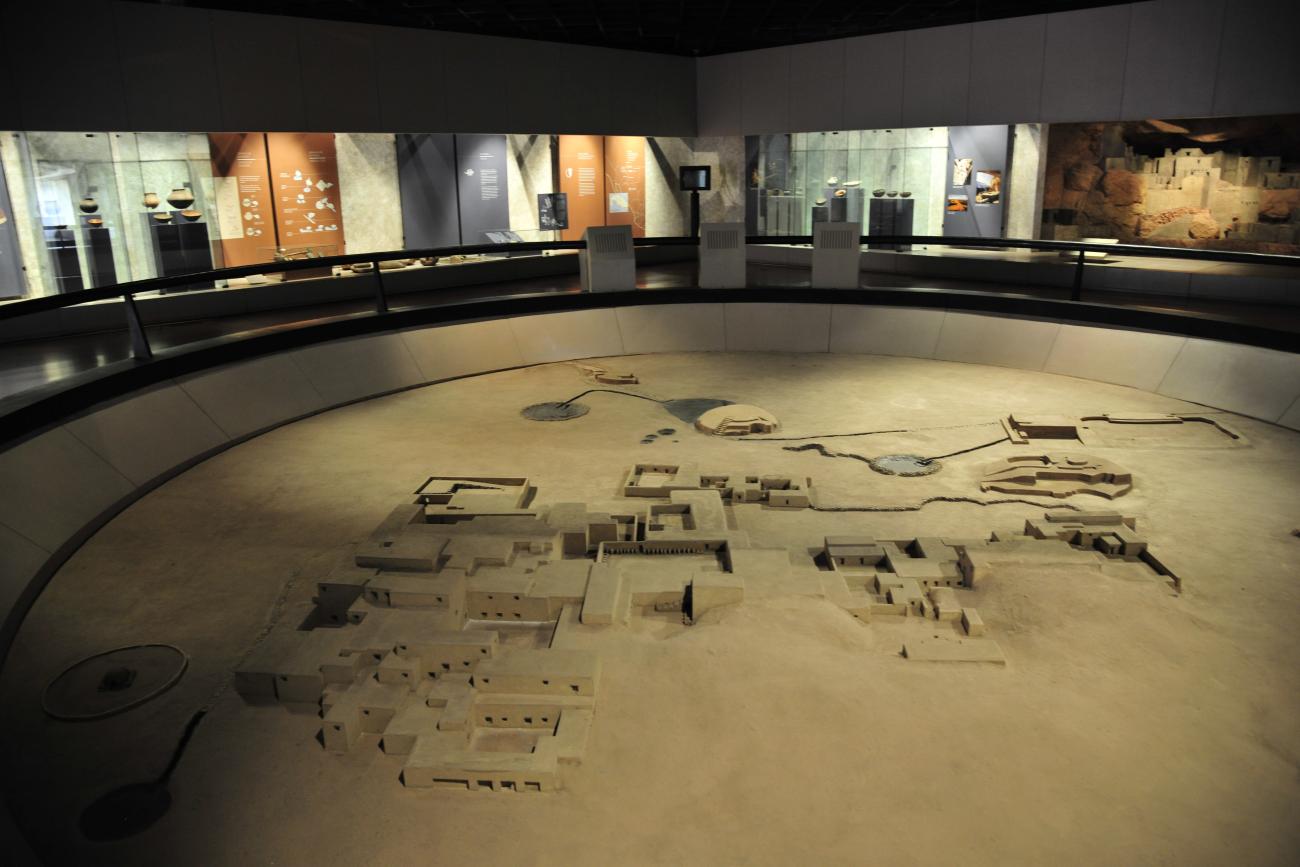
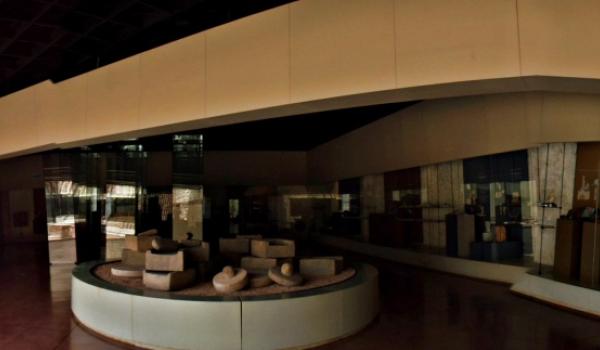
To the right, the exhibit "Ancient Times (30,000 B.C. to 100 A.D.)" explores the earliest inhabitants of the region and their practices of hunting and gathering. It features fossils of large mammals and a collection of artifacts that illustrate life during those early times. A map highlights the first cultural areas of the Gran Chichimeca, divided into four regions: Mogollón, O'otam, Seri, and Anasazi.
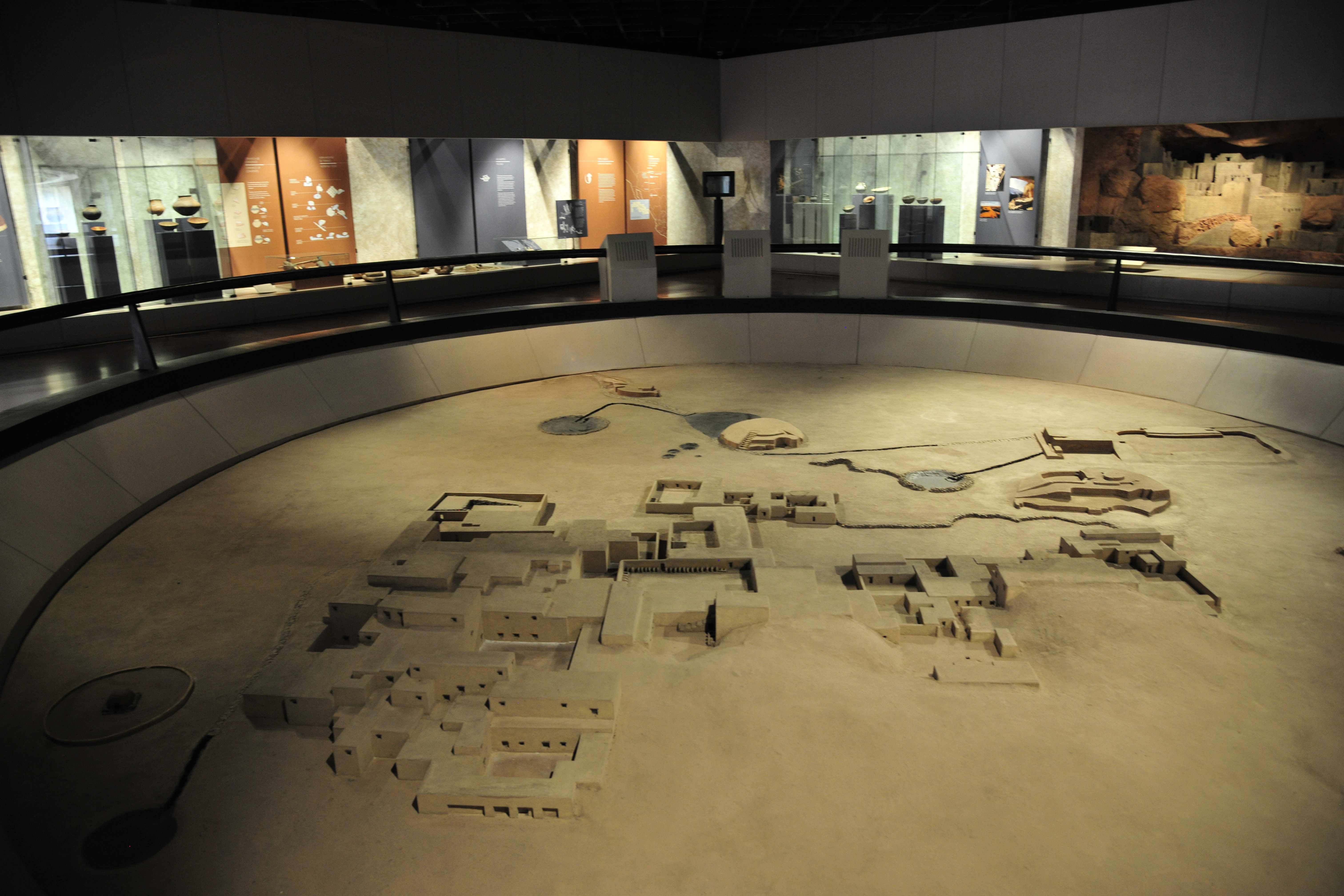
At the center of the room stands a scale model of Paquimé, showing what the city likely looked like at its peak. The model reflects the culture’s advanced water management technology. Around it, three interactive displays provide detailed information on different aspects of city life, including its historical periods and domestic, civic, and religious architecture.
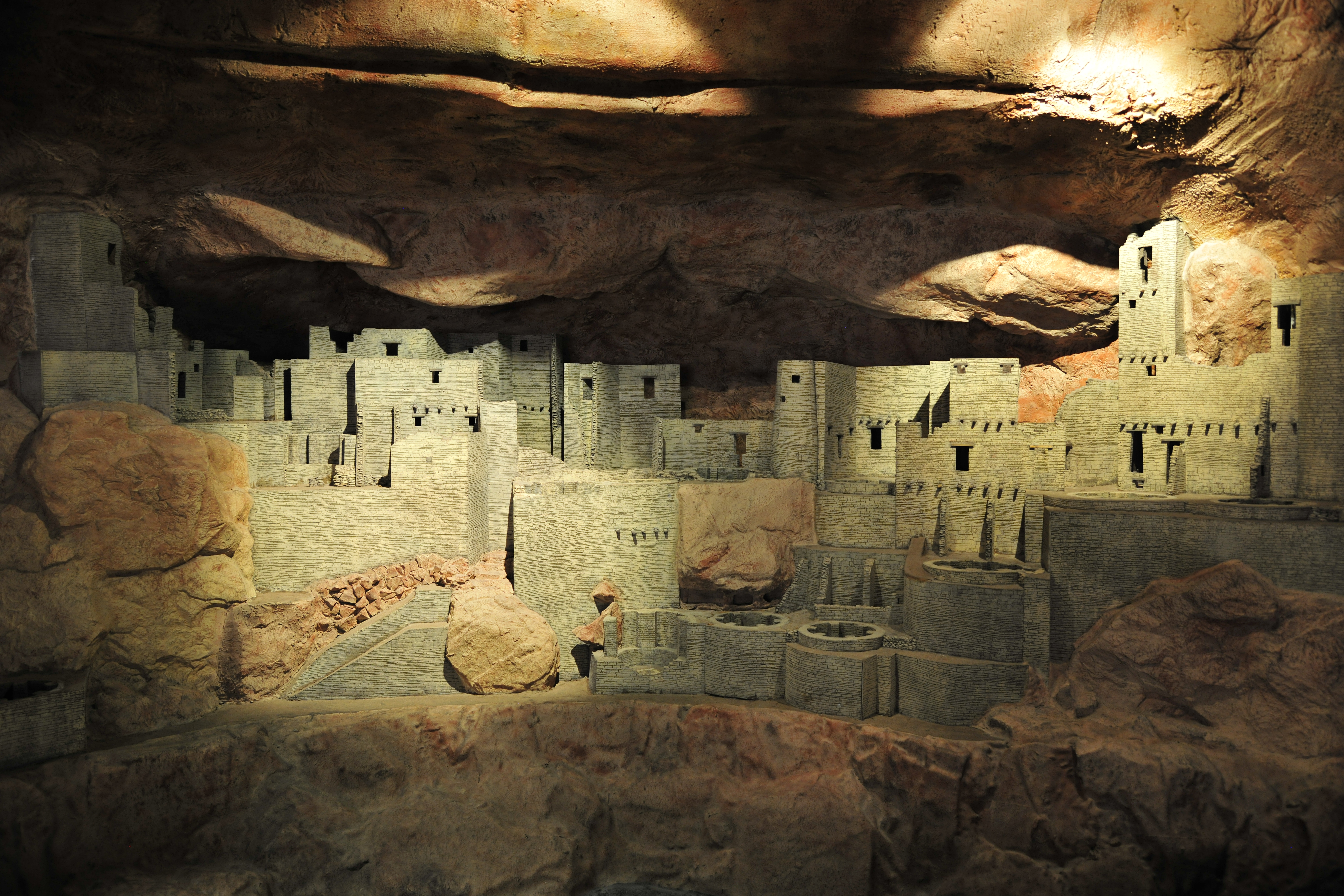
Next to the model of Mesa Verde, visitors can learn more about Paquimé’s use of water—crucial for survival in the desert. Illustrations explain the layout of spring basins and the technologies used to distribute water. Separate display cases feature models reconstructing household water systems, as well as fine examples of Paquimé’s hallmark polychrome pottery, known for its exquisite design and craftsmanship.
Room 2
This room explores daily life in Paquimé. Large display cases contain the essential raw materials used by the community, while smaller side cases highlight various craftspeople and their work:Potters, with examples of clay techniques, designs, uses, and functionsStoneworkers, who skillfully carved…
Room 2


This room explores daily life in Paquimé. Large display cases contain the essential raw materials used by the community, while smaller side cases highlight various craftspeople and their work:
- Potters, with examples of clay techniques, designs, uses, and functions
- Stoneworkers, who skillfully carved sculptures, ceremonial objects, tools, and utensils
- Shell artisans, creators of decorative and ritual items of great ingenuity
- Copper workers, who produced both large and small objects and jewelry
- Bone artisans, who carved tools from various animal bones
- Weavers and miners, who understood the properties of different minerals and plants
- Carpenters and builders, shown with their construction tools
The room also highlights trade—Paquimé’s main vocation—and the intricate networks connecting the Gran Chichimeca and Mesoamerica.
In the second corridor, niches contain offerings to the gods—finely crafted objects in stone, ceramics, and metal used by shamans, priests, and spiritual healers. Musical instruments on display suggest both ceremonial and recreational uses. Opposite the niches, a section presents a depiction of the city's decline and abandonment, likely in the 13th century. Whether caused by war, prolonged drought, or a combination of factors, the people of Paquimé set off “toward other lands.” A map illustrates post-Paquimé settlements, with emphasis on the site of Tres Ríos.
Room 3
When the Spanish arrived in the region, Paquimé had long been abandoned. The history of northern Mexico differs from that of the south. The Spanish conquest here took the form of missions—“the sword and the cross”—marking a period of colonial penetration and frequent indigenous uprisings. These…
Room 3

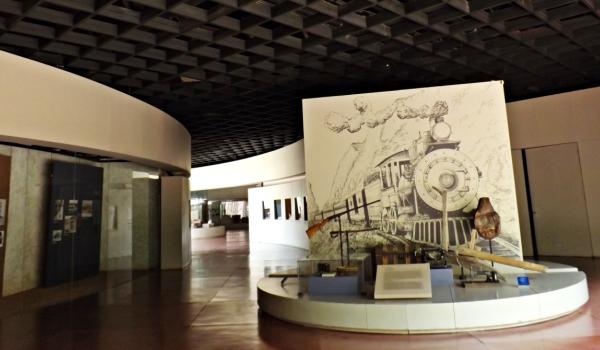
When the Spanish arrived in the region, Paquimé had long been abandoned. The history of northern Mexico differs from that of the south. The Spanish conquest here took the form of missions—“the sword and the cross”—marking a period of colonial penetration and frequent indigenous uprisings. These were not subdued peoples, but often exterminated ones. A small video room offers a summary of regional history from the colonial period through the 20th century.
This room also features a model of the San Antonio de Padua mission, near Casas Grandes, and an old map showing early routes and settlements. Artifacts from the colonial era are on display, including weapons. The central panel presents a selection of historical objects from northern Mexico, especially tools used in mining, ranching, and agriculture.
From the lobby, visitors can access the Central Courtyard, leading to the second floor with terraces and a large scenic overlook of the natural landscape surrounding Casas Grandes—and a stunning view of the archaeological site of Paquimé. The descent down a ramp begins the tour of the Archaeological Zone.

Document
Document
- DirecciónMauricio Salgado Servínmauricio_salgado@inah.gob.mx+52 (636) 692 41 40AdministraciónAdrián Manuel Pérez Chávezadrianmanuel_perez@inah.gob.mx+52 (636) 692 80 03Responsable de ConservaciónEduardo Pio Gamboa Carreraeduardo_gamboa@inah.gob.mx+52 (636) 692 41 40